A candid perspective on artificial intelligence in security technology – cutting through hype, risks, and real-world deployment.
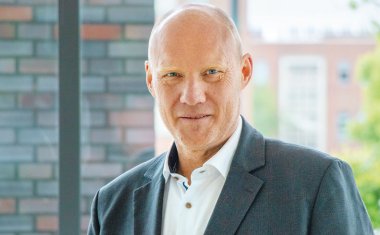
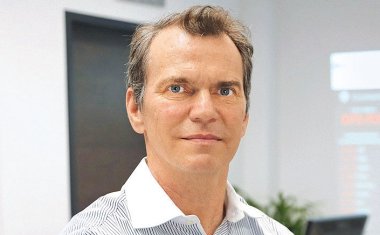
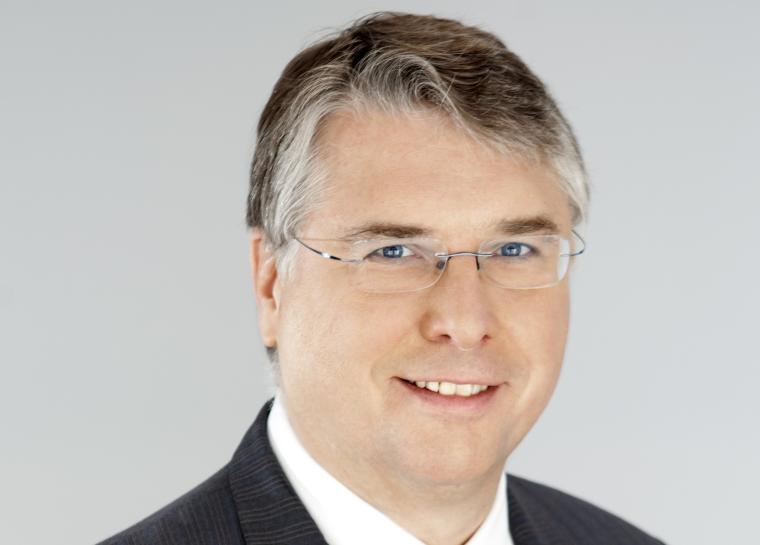
It is not every day that an invitation to attend an international press event drops into your letterbox. A two-day program of events had been organized in February this year at the Genetec headquarters in Montreal. Matthias Erler from GIT SECURITY took the opportunity to speak with CEO Pierre Racz, founder and President of Genetec, about his company’s latest projects.
A two-day program of events at the Genetec headquarters had been organized in February this year for the attendees, who had arrived from many different countries. The physical security market is undergoing ever more rapid changes to adapt to developments in the geopolitical world as well as to the significant improvements in the available technology. Andrew Elvish, Vice President Global Marketing at Genetec, reminded the attendees about the current state and probable future of the market from the point of view of Genetec – GIT SECURITY International reported earlier. In our interview, Genetec’s CEO, Pierre Racz, explained his views, particularly on the role of artificial intelligence in his industry.
Genetec
COVER STORY Genetec
Read also the full issue of GIT SECURITY International 2/26 now – featuring the interview with Pierre Racz on the cover.
View the e-paperGIT SECURITY: Mr. Racz, let us start by asking you, what is currently the most important impact of artificial intelligence within your company?
Pierre Racz: The first thing to understand is that the term ‘AI’ has evolved significantly over time. I have personally been working in this field since the 1980s, when AI meant logic programming – Lisp, Prolog, that kind of thing. Later, we moved on to neural networks and support vector machines. We have actually been using what was considered AI in our products for a long time – since around 2003. With the rise of deep neural networks around 2010, we transitioned to those, and they have been a core part of our systems since 2012. More recently, we have also been experimenting with large language models.
As an engineer, what matters most to me is understanding the strengths and weaknesses of the tools. It is like building a bridge: if you expect heavy loads, you do not use wood, you use steel. Similarly with AI, you need to know where it works well and where it does not. That is why we design our systems so that the impact of failure is minimized. In practice, this means we keep AI out of the final decision-making loop. Humans provide judgment and creativity while machines handle the heavy lifting.

What does that look like in practice?
Pierre Racz: AI is particularly good at what you might call ‘fuzzy search’. It can identify patterns and similarities in large datasets, but it is actually quite poor at detecting fine details. This is because it is fundamentally probabilistic. It does not ‘know’ things – it estimates based on patterns. What people often call ‘hallucinations’ are really just the system returning results that are close enough statistically, even if they are not correct.
You have used the term “impressionism” to describe just that…
Pierre Racz: Yes, that is a useful analogy. Before photography, painters – and especially realists – aimed to reproduce reality as accurately as possible. But that role became obsolete once photography emerged, so artists adapted. The Impressionists began painting in a more abstract, ‘pixelated’ way – large brush strokes that only form a coherent image when viewed from a distance. You do not see precise detail; you get an impression. AI works in a similar way: it forms an impression based on its training data and projects your question onto that. The result is essentially a guess – sometimes surprisingly accurate, but still a guess.
What do your customers expect from AI today?
Pierre Racz: Interestingly, many customers have become quite skeptical. At industry events, you see vendors enthusiastically promoting AI, but customers often respond: “Do not give me noise – give me something useful.” They do not have time to evaluate endless new technologies, and there is a growing awareness that simply labeling something as ‘AI-powered’ does not mean it is valuable. In fact, it can be a red flag. There is even a tendency to use “AI” as shorthand for poorly done work. Some people joke that AI is like a lazy intern with a bad attitude.
So AI is more of a tool than a solution?
Pierre Racz: Exactly. It is like a calculator: it does not make you smarter or dumber – it just makes you faster, but only if you know how to use it properly. There is also a growing ability to recognize AI-generated content. Once you have learned the patterns, you start noticing them everywhere – repetitive structures, overused phrasing, and so on. And fundamentally, AI does not innovate – it imitates. It recombines what already exists.
Looking ahead, how do you think AI will change the physical security industry over the next five to ten years?
Pierre Racz: In the short term, I expect problems. We will likely see what I would call ‘sloppy security’ – systems that work well in controlled environments but fail in the real world. This can create a false sense of security, and adversaries will exploit these weaknesses. I think we will see some significant incidents as a result. There is even a term for this: “AI slop”. It refers to low-quality, poorly implemented AI systems.
Is that already happening?
Pierre Racz: Yes, it is. It just has not yet led to large-scale, widely reported disasters. Over time, though, we will learn. Every new technology goes through this phase. When electricity was first introduced, people used it for all sorts of absurd applications. It takes decades to figure out how to use new technology properly.

You also mentioned that people tend to anthropomorphize AI.
Pierre Racz: Yes, that is a major issue. Humans naturally project intelligence onto these systems. We saw the same thing decades ago with early chatbots like “Eliza”.
Today’s systems are more sophisticated, but the underlying limitation remains: they do not truly understand. They can also struggle with ambiguity – for example with certain linguistic constructs that humans can easily interpret.
Let us return to your company. What are your plans for the coming years?
Pierre Racz: Our focus is on helping customers to achieve greater operational efficiency. Many of them face constraints – budgetary, regulatory, or legal – and they want to know how technology can help them to meet those constraints without compromising their mission. Interestingly, about 50% of our product features come directly from customer input. The other 50% are things we anticipate ourselves – though not all of those turn out to be useful. Our approach is essentially exploratory problem-solving. We work closely with customers, test ideas, and iterate – without wasting their resources.
Are there any current developments you can share?
Pierre Racz: One key direction is our hybrid approach – bridging the gap between cloud and on-premises systems. Different organizations have very different requirements: some want everything in the cloud, others want minimal cloud involvement, and many need a mix due to regulatory or performance constraints. We have designed our systems to handle this flexibility with a single code base. That allows us to adapt to different environments without forcing customers into a rigid architecture.
Thank you very much for your time.
Pierre Racz: My pleasure.